Motorhead Articles

Get Your Marketing in Gear

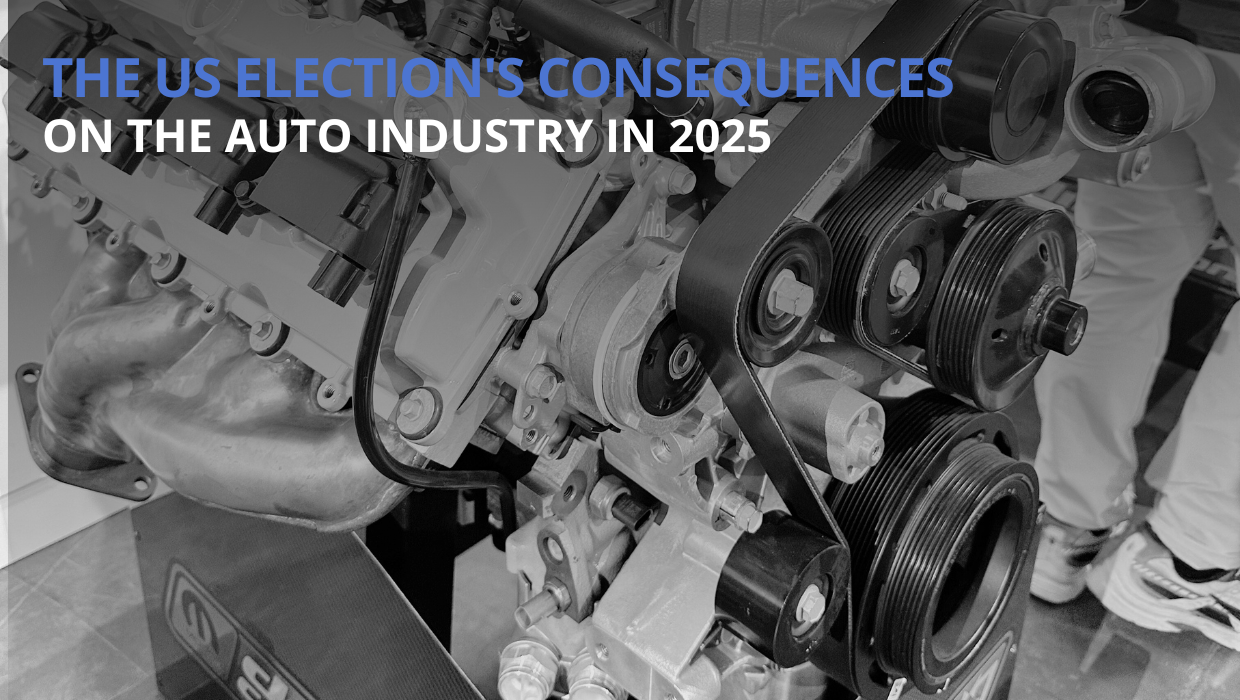
The US Election's Consequences on the Auto Industry in 2025

Keith Bourgeois • January 13, 2025

Typically we focus on the automotive trends we see at the SEMA show in our annual article, but this year is different. Much different. We’re going to stay away from discussing politics and ideology, but the long-lasting effects of the presidential election on our hobby is impossible to ignore and needs to be addressed. Regarding this, we’re focusing on Dodge, who is the auto manufacturer arguably most affected by the election.
US Election's Consequences on the Auto Industry


Stellantis has a Big Problem


Regrettably, for the fans of the “Brotherhood of Muscle,” Stellantis bought into the current administration's EV mandate. They canceled our beloved Hemis and are presently rolling out vehicles nobody on either side of the pond wants to buy. With the EV mandate, the US Government and other world governing bodies were promising huge kickbacks and incentives. So, even if an EV car failed, at least the bottom wouldn't be rock hard, and they'd get some money to pay for their innovation, tooling, and development costs. 


Even with that, with this current election result, Stellantis is going to be in a pickle of all pickles. Just like in 2016, Trump upended Obama's EPA mandates in the first 72 hours he was in office. He's already claimed that this is also another “day one” issue for him, so we can rest assured that the EV mandate and the onerous 2025+ EPA regulations are going to be rolled back or eliminated.
Biden’s EPA is trying his best to thwart this by forcing California's regulations down everyone’s throats, well at least the 17 States that signed onto California’s CARB mandates, and soon, all the free money for EV adoption is going to evaporate. Companies like Ford, who never got out of the internal combustion game, are going to be looking very good. 


Stellantis, the world's largest automaker with a fleet of vehicles for sale that nobody wants in the first place, isn't going to be buoyed by government incentives. We’ll be looking at their lineup for the first time, and there’s no V8. Stellantis, who built its entire identity on loud, powerful, crazy V8 engines, never produced enough 4-cylinder vehicles, hybrids, or EVs to offset the CAFE requirements, thus dooming their V8s. I think the waves are going to crash up against the rocks hard by the end of this year. 2025 is going to be an earnings bloodbath for them in North America. Likely, 2026-2027 won't be much better unless they can shoehorn a V8 into that Charger Daytona.


The Landscape Has Changed Overnight


While I agree that the I6 Hurricane is the engine people want when compared to the EV, it's still not the engine they'd pick, given an optional V8. I would bet the farm that Chevy and Ford will jump full-on back into V8 production, and I wouldn't be surprised if another Camaro didn't magically reappear by 2026-2027.


I remember reading a piece on the End of the Mopar V8s due to the Obama CAFE hike. Remember that, had Trump not punted/changed/killed the CAFE standard back in 2016 that was to go into effect in 2017, Dodge would have lost all their passenger car V8s by the end of 2018. But, as luck would have it, Trump won, and they got a reprieve. We would have had no Redeye, no Super Stock, and no 1320 Challengers if Trump had not won in 2016. The original Demon might have been the end of the line of the second golden age of the muscle car.


Keep in mind the EPA is an executive branch agency, so Trump doesn't need Congress to squash or amend the CAFE standards. The primary pain point for domestic automakers is the EV mandate, which Trump has said numerous times is going to be eliminated. This won't prevent states like California and New York from maintaining their own state mandates, but it will allow the rest of free America to hopefully have more affordable real engine options in the future. I fully expect Trump to roll back the EPA this time. Also, Elon Musk is supposedly going to take the government efficiency oversight position, so we'll see what he does with that. Musk might own Tesla, but I think he hates the EPA more than us car guys do.


Is There Hope for the Future?


All I can say is that the future is a bit uncertain, but the worst of it was yesterday. It only gets better from here in automotive terms. Pull back the regulations, let consumers decide what we want and allow manufacturers to build them. That's all that needs doing, and I have a feeling that's what is going to be allowed to happen. 


But is it too late for Dodge to come back? With Tim Kuniskis back on board and the head Stellantis stepping down it’s a big move in the right direction.  It takes a few years to get new models from design to production, but powertrain adaptation only takes a fraction of that time. So, the question becomes does Stellantis suck it up and let Dodge start building a new generation of V8s? Especially now that
we know everyone at Dodge wanted to keep the V8 besides the now deposed CEO. Or are they going to dig in and stick with the EV nonsense? 


2025-2026 are going to be utterly painful because they picked the wrong horse. Are they going to move quickly to position themselves to capitalize on the more favorable EPA standards? What we see them do in the next 60 days is going to determine if Dodge remains a viable brand or not in the future. We’ll have to wait and see.
By Shanna Cathey August 20, 2026
The average age of a light vehicle in the United States is now 12.8 years, according to the latest publicly released national benchmark from S&P Global Mobility (the firm completed its spinoff into an independent company, now called Mobility Global, in July 2026, though its research is still widely cited under the S&P Global Mobility name). For the automotive aftermarket, that means a growing population of vehicles entering the years when maintenance, repair, replacement parts, diagnostics, and upgrades become increasingly important. The American vehicle fleet is getting older, and it's changing how aftermarket businesses need to think about growth. S&P Global Mobility reports that the U.S. fleet has grown to 289 million light vehicles in operation. Passenger cars now average 14.5 years old, while light trucks average 11.9 years. The high-volume 2015 through 2019 model years are also moving deeper into the aftermarket service cycle as more vehicles leave their original warranty coverage. For independent repair shops, parts suppliers, restoration specialists, performance businesses, and custom builders, the opportunity is substantial. It is not automatic, however. The businesses positioned to benefit will be the ones prepared to service an aging but increasingly technical vehicle population. Why Does an Aging Vehicle Fleet Create Aftermarket Opportunity? Older vehicles generally require more frequent maintenance and a wider range of repairs. Wear items reach the end of their service life. Seals, wiring, suspension components, cooling systems, electronics, and emissions equipment begin to demand more attention. Owners also start making larger decisions about whether to repair, restore, upgrade, or replace the vehicle. S&P Global Mobility identifies vehicles between six and 14 years old as a prime range for aftermarket service. Its research indicates that vehicles in this age range, along with even older models, are expected to represent at least 70% of vehicles in operation for several years. The newest industry forecast reinforces that opportunity. In June 2026, the Auto Care Association and MEMA Aftermarket Suppliers projected that the U.S. light-duty automotive aftermarket would grow 5.2% in 2026. The market is expected to surpass $500 billion by 2029, supported by the aging fleet, increasing vehicle complexity, and continued consumer reliance on personal transportation. Why Are Americans Keeping Vehicles Longer? High new and used vehicle prices and broader economic uncertainty continue to influence replacement decisions. Many drivers would rather invest in a vehicle they already know than take on the cost of replacing it. Modern vehicles are also durable enough to remain useful well beyond the point when earlier generations of owners may have traded them. From the shop side, the pattern is familiar. A customer says, "I just need it to last another year." Then one year becomes three. The truck remains essential to the business. The SUV stays in the family. The daily driver becomes a project because the owner would rather improve it than start over with another payment. This is where the aftermarket becomes essential. It gives vehicles a second, third, and sometimes fourth life. A 12-Year-Old Vehicle Is Still a Modern Vehicle An older fleet does not mean a simpler repair environment. A 12-year-old vehicle can still contain numerous control modules, emissions equipment, infotainment systems, electronic security features, networked sensors, and early-generation advanced driver-assistance systems. Shops must continue investing in technician training, scan tools, software subscriptions, service information, programming equipment, and calibration procedures. This is also why the Right to Repair issue remains relevant. As Motorhead Digital covered in Part 1: The Right to Repair Fight and the Freedom to Fix Victory , recent federal action created meaningful progress around emissions-related repair information and aftermarket emissions compliance. However, broader questions involving telematics, proprietary software, cybersecurity access, and non-emissions repair data remain unresolved. Older vehicles need more than replacement parts. They need judgment. They need technicians who understand the vehicle as a complete system and can distinguish a smart repair from a poor investment. They need suppliers with accurate fitment data and specialists who can combine traditional craftsmanship with modern diagnostic discipline. Which Aftermarket Businesses Stand to Benefit? Independent mechanical shops can benefit from increased demand for preventive maintenance, diagnostics, suspension work, cooling-system repairs, electrical repairs, emissions service, and age-related wear components. Parts manufacturers, distributors, and retailers can benefit from sustained demand across a wider range of model years. Accurate fitment data, inventory planning, and technical support become even more important when the active vehicle fleet spans decades. Restoration, performance, and custom shops have another opportunity. As replacement costs remain high, some owners will choose to improve vehicles they already own through: Drivability upgrades Modernized electronics Braking and suspension improvements Engine work Interior restoration Full custom or restoration builds The aging fleet is also increasingly diverse. S&P reports that battery-electric vehicles average 3.7 years old, plug-in hybrids average 4.9 years, and traditional hybrids average 6.4 years. Those vehicles will create additional service opportunities as they age, but they will also require new training, safety processes, tooling, and parts knowledge. Trust Becomes More Important as Repair Decisions Get Bigger The owner of a 12- or 15-year-old vehicle may be deciding whether to spend several thousand dollars on a vehicle with limited market value but significant practical or emotional value. That customer is not only buying a repair. They are buying confidence in the recommendation. Shops need to explain: What is urgent What can wait What may fail next Whether the proposed work makes financial sense Which repairs can be completed in phases What can be upgraded Clear inspections, photos, videos, written estimates, and phased repair plans help customers make informed decisions without feeling pressured. Motorhead Digital's Trust, Loyalty & Relationships: The Real Shop Advantage explains why trust often begins before a customer enters the shop. People study reviews, websites, project photos, and social media to decide whether a business looks credible, transparent, and capable. Pricing communication matters too. Older vehicles can expose hidden problems, discontinued parts, long lead times, and changing supplier costs. Tariffs, Pricing Pressure, and How Auto Shops Can Communicate Value Better offers practical guidance for explaining those variables without apologizing for charging appropriately.
Level 7 Motorsports Rebrands Its Parts Store as Spirit and Speed
By Barry Alt August 5, 2026
Level 7 Motorsports rebrands its performance parts store as Spirit and Speed, featuring an expanded parts lineup and a refreshed Shopify website.
A smiling automotive technician in a repair shop raises both fists beneath a banner.
By Shanna Cathey & Barry Alt July 22, 2026
The automotive right to repair battle just saw a massive victory with the Freedom to Fix memorandum. Learn how independent shops can leverage this to win.
AI,
By Shanna Cathey June 11, 2026
AI won't replace your technicians, but it can make your shop faster, sharper, and more visible. Here are 5 practical ways performance, restoration, and custom shops can use AI in 2026.
Macro shot of a workord : “Tariffs, pricing pressure, & how auto shops can communicate value better”
By Shanna Cathey May 1, 2026
Tariffs are squeezing the specialty automotive aftermarket. Here's how restoration, custom build, and performance shops can communicate pricing clearly, build customer trust, and protect their businesses as costs climb.
Students in Wayne Technical Career Center auto shop posing in hoodies around car body panel
By Keith Bourgeois April 10, 2026
What started as a car show became a mission to inspire young builders. See how students are gaining real skills while helping preserve automotive culture.
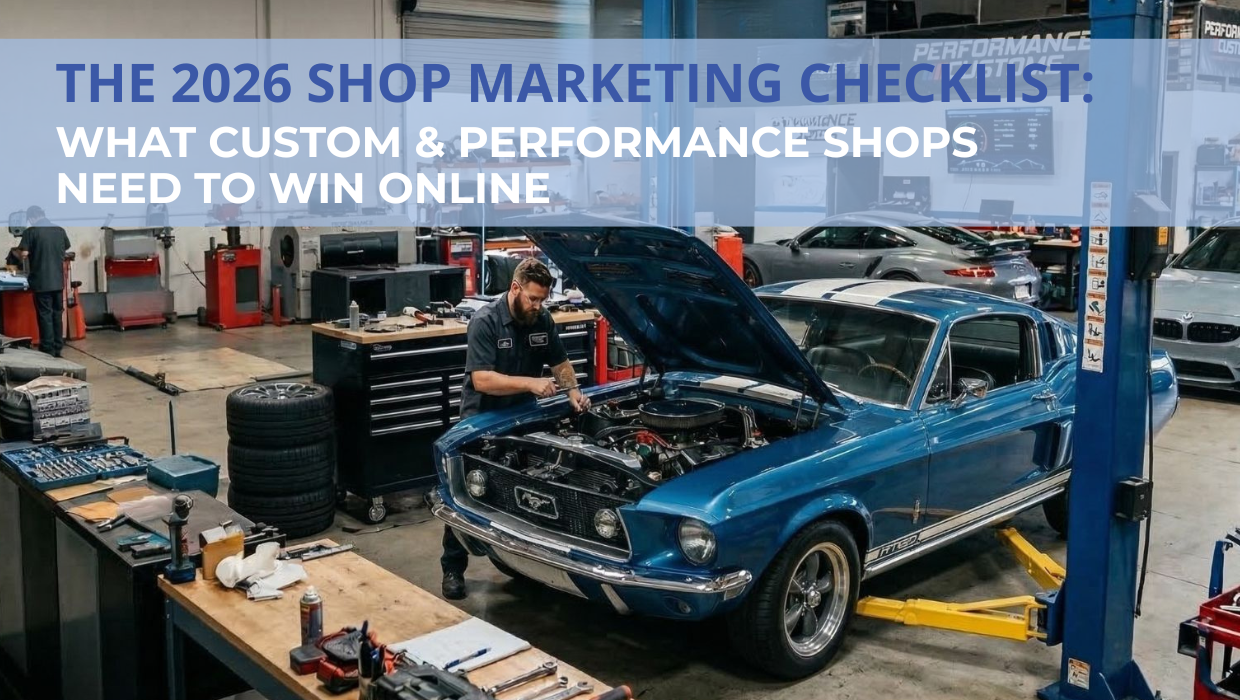
Automotive technician working on a classic blue Ford Mustang inside a professional performance shop
By Shanna Cathey March 13, 2026
A practical 2026 marketing checklist for custom car, restoration, and performance shops. Learn the essential digital marketing strategies every automotive shop needs to increase visibility, generate leads, and win more builds online.
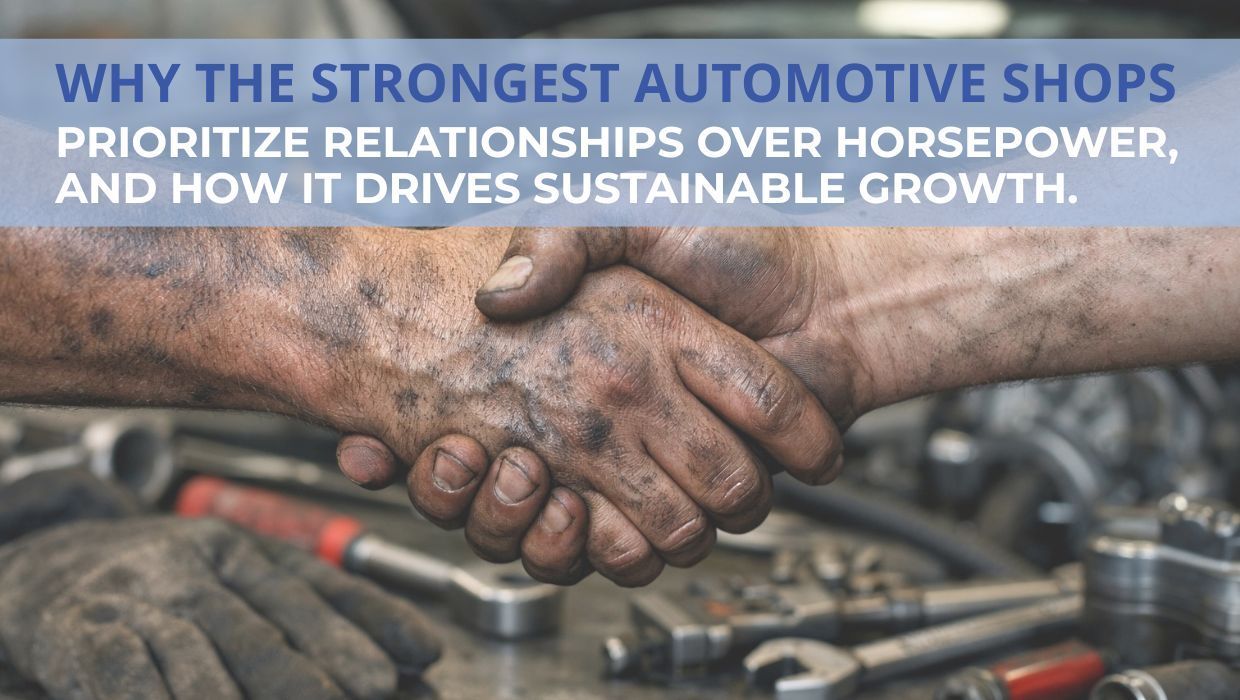
Two dirty hands shaking, text: Automotive shops prioritize relationships for growth.
By Grace Caple February 16, 2026
Trust isn't a buzzword in the automotive aftermarket, it's currency. Discover how successful shops build loyalty, earn trust, and create lasting customer relationships that fuel long-term growth.
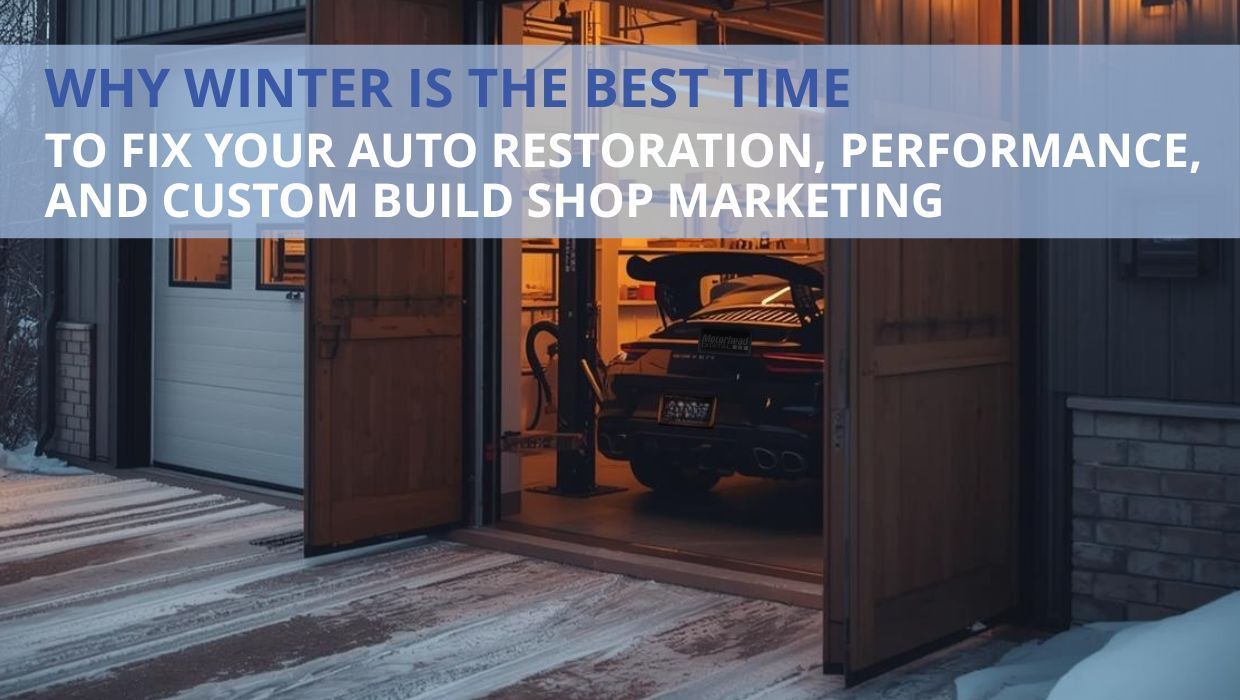
Image of Porsche in a performance shop in the winter
By Shanna Cathey & Barry Alt January 21, 2026
Your shop may be slow in the winter, but it's the perfect time to fix your Auto Restoration, Performance, and Custom Build shop marketing. Learn why winter is ideal for systems, strategy, and growth.
AI’s Place in Automotive Aftermarket Shops - PART 2
By Barry Alt December 13, 2025
How artificial intelligence can power your company’s engine behind the scenes.
Show More